
Best Rice Terraces in Bali: Tegallalang or Jatiluwih?
Tegallalang is the rice terrace most first-time visitors recognise. Jatiluwih is the one I’d choose if I wanted to spend a few hours actually exploring Bali’s rice-growing landscape.
That difference matters, because these aren’t two versions of the same attraction. Tegallalang fits naturally into a day around Ubud and is easy to combine with temples, lunch and other stops. It’s also busy and far more developed for tourism than many of the photographs suggest.
Jatiluwih requires more commitment from Seminyak, but the reward is a much larger landscape where the rice terraces themselves become the reason for making the journey. You can walk through the fields, slow the day down and see a working agricultural landscape rather than stopping mainly for the view.
And you may decide you don’t need either. Rice fields appear throughout Bali, so an itinerary that already includes Sidemen, Munduk or other rural areas may give you plenty of opportunities to experience them without adding another long drive.
Key Takeaways
- Tegallalang is the practical choice if you’re already planning a day around Ubud and central Bali.
- Jatiluwih is better if you want the rice terraces to be one of the main experiences of the day rather than a quick stop.
- Tegallalang is highly developed for tourism, so don’t expect a secluded rural experience.
- Jatiluwih forms part of Bali’s UNESCO-listed cultural landscape and gives you much more space to explore on foot.
- You don’t need to visit a famous rice terrace attraction simply to see rice fields in Bali; areas such as Sidemen and Munduk offer beautiful working landscapes too.
- The terraces don’t stay the same shade of green throughout the year. They’re working farms, and individual fields can be at different stages of planting and harvesting.
Tegallalang vs Jatiluwih at a Glance
If you’re deciding between the two, I’d start with how much of your day you actually want to devote to rice terraces.
| If You Want… | I’d Choose… | Why |
|---|---|---|
| Rice terraces as part of an Ubud sightseeing day | Tegallalang | Easy to combine with other central Bali stops |
| The classic first-time Bali rice-terrace view | Tegallalang | This is the landscape most visitors recognise |
| A larger countryside experience | Jatiluwih | The terraces extend across a much broader landscape |
| More time walking through rice fields | Jatiluwih | Better suited to making the landscape itself the experience |
| Fewer tourism attractions around the terraces | Jatiluwih | Less focused on swings and photo installations |
| To learn more about Bali’s traditional rice-growing landscape | Jatiluwih | Part of Bali’s UNESCO-listed Subak cultural landscape |
| The quickest stop during an already busy day | Tegallalang | Makes much more sense when you’re already around Ubud |
Neither is a short walk from Seminyak, so I wouldn’t choose based purely on which one appears slightly closer on a map.
For most first-time visitors who already have Ubud in their plans, Tegallalang is the easier choice. If you’ve got more time and genuinely want to spend part of the day walking through Bali’s agricultural landscape, I’d make the extra effort for Jatiluwih.
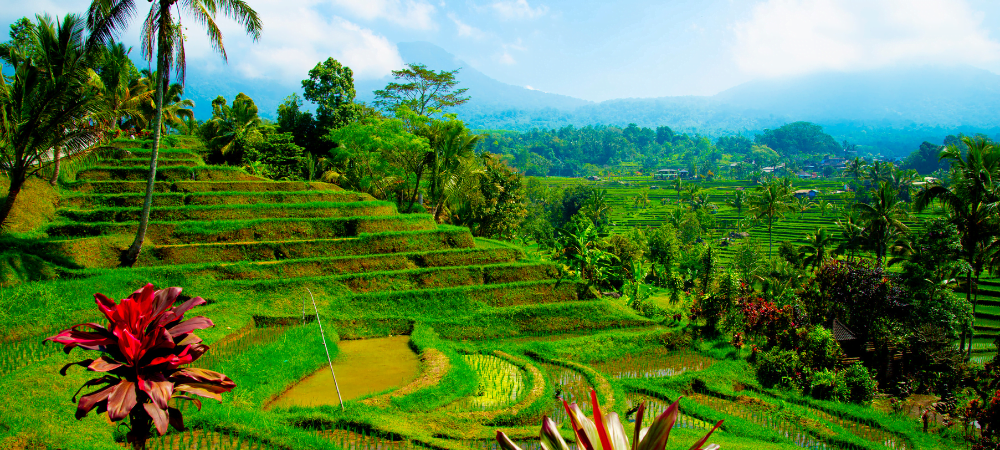
Tegallalang: Best as Part of an Ubud Day
Tegallalang works best when you stop thinking of it as a destination that needs an entire day.
If you’re already heading towards Ubud, it’s easy to build the terraces into the same route as places such as Tirta Empul, Ubud itself or another attraction in central Bali. That’s when I’d recommend it most strongly. I wouldn’t make the journey from Seminyak simply to take a photograph of the terraces and immediately turn around.
It’s also worth arriving with realistic expectations. Tegallalang is one of Bali’s best-known attractions, and the area around the terraces reflects that. You’ll find swings, cafés, photo spots and plenty of other visitors. If you’ve seen photographs that make it look like a quiet farming valley nobody else knows about, that’s not the experience I’d expect.
None of that means you should skip it. The landscape is impressive, particularly if this is your first time seeing Bali’s rice terraces. I’d just go earlier in the day, allow enough time to walk rather than stopping only at a viewpoint, and accept that you’re visiting a popular attraction.
If you’re planning a short first trip, our 4-day Bali itinerary shows how I’d fit central Bali into the trip without spending every day driving across the island.
Jatiluwih: Best When the Rice Terraces Are the Destination
Jatiluwih is a different proposition. I wouldn’t squeeze it between several unrelated attractions simply because you happen to be in that part of Bali.
The terraces spread across a much larger landscape, and the experience makes more sense when you give yourself time to walk through it. There are different walking routes, so you can choose something relatively short or spend considerably longer exploring the area.
Jatiluwih is also part of Bali’s UNESCO-listed Cultural Landscape, which recognises the traditional Subak system of rice cultivation, irrigation and water temples. That matters because what you’re looking at isn’t a landscape created for tourism. These are working rice fields shaped by a farming system that has been part of Balinese life for centuries.
The trade-off from Seminyak is the journey. Jatiluwih requires more of your day than Tegallalang does when you’re already visiting Ubud, so I’d go because you genuinely want the countryside experience—not simply because you’ve heard it’s less crowded.
For someone who enjoys walking, photography or rural scenery, I think the extra effort can be worthwhile. For someone who mainly wants to see a classic rice-terrace view during a busy first trip, Tegallalang is probably the more practical choice.
What Is Bali’s Subak System?
The terraces make much more sense once you know a little about how the water reaches them.
Subak is Bali’s traditional cooperative irrigation system. Rather than individual farmers simply controlling their own supply of water, farming communities coordinate how water is distributed through networks of canals and irrigation structures, with water temples playing an important role in the system.
It isn’t simply an old irrigation technique. The system connects farming, community organisation and Balinese Hindu ideas about the relationship between people, nature and the spiritual world.
You don’t need to study all of that before visiting a rice terrace, but knowing it changes what you’re looking at. Those carefully shaped fields aren’t there simply because terraces photograph well. They’re part of a working agricultural system.
That’s particularly important at Jatiluwih. The fields are still being farmed, so I’d treat them as farmland first and a visitor attraction second. Stick to the appropriate paths, don’t walk into planted fields for photographs and avoid interfering with irrigation channels.
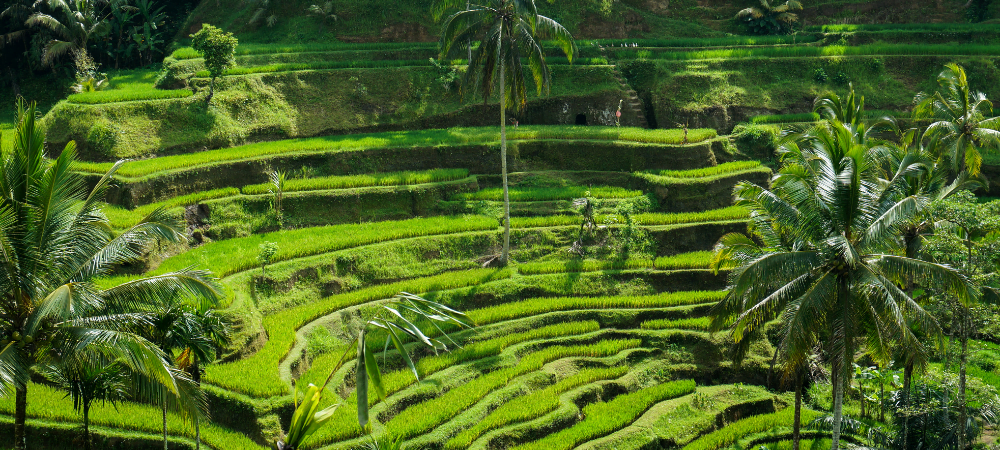
Do You Need to Visit a Famous Rice Terrace?
Not necessarily.
If your itinerary already includes rural areas such as Sidemen or Munduk, you’ll see rice fields as part of the landscape rather than as a standalone attraction. For some travellers, that’s actually the experience they’re looking for.
Sidemen in particular is a good alternative if you want traditional villages, rice fields and mountain scenery without building the day around one famous viewpoint. I’ve included both Sidemen and Munduk in my guide to Bali’s hidden gems.
For a first visit centred around Seminyak and Ubud, I’d still consider Tegallalang. For a longer trip, you may find that the best rice-field experience happens naturally somewhere else.
How I’d Plan the Trip From Seminyak
For Tegallalang, I’d build the day around central Bali. Visit the terraces earlier, then combine them with one or two nearby experiences rather than returning directly to Seminyak.
For Jatiluwih, I’d make the countryside the focus. The journey is long enough that trying to add Ubud and several other major attractions usually creates an unnecessarily rushed day.
Whichever you choose, I’d use a driver rather than spending the day arranging separate transport between stops. It also gives you more flexibility if traffic changes your plans.
The same principle applies to most sightseeing from Seminyak: group places geographically rather than collecting attractions from different parts of Bali simply because they all appear on a list.
When Is the Best Time to Visit Bali’s Rice Terraces?
Morning is usually my preference. It’s cooler for walking, and at popular places such as Tegallalang you’ll generally have a better experience before the busiest part of the day.
What I wouldn’t do is plan the entire trip around seeing perfectly bright-green rice fields.
These are working farms. Fields are planted and harvested at different times, so the landscape changes throughout the agricultural cycle. Even neighbouring terraces may look different when you visit.
Weather matters too. Walking paths can become slippery after heavy rain, while the middle of a hot day isn’t always the most comfortable time to explore exposed fields. Our guide to the best time to visit Bali has more detail on what the seasons are actually like.
Respect the Rice Fields
It sounds obvious, but rice terraces aren’t outdoor photography studios.
Stay on designated paths, don’t step into planted fields for a photograph and avoid touching irrigation structures. If access to an area is restricted, respect it.
Tourism brings income into these areas, but the landscape still needs to function as farmland. That’s particularly important somewhere such as Jatiluwih, where preserving the traditional agricultural landscape is part of what makes the area significant in the first place.
You don’t need to make the visit complicated. Walk, enjoy the scenery, buy something locally if you want to stop for food or a drink, and remember that people are working around you.
FAQ
Which rice terrace is best in Bali?
For a first-time visitor already going to Ubud, I’d choose Tegallalang. If the rice terraces themselves are one of the main things you want to experience, I’d choose Jatiluwih.
Is Jatiluwih better than Tegallalang?
Not necessarily. Jatiluwih offers a larger and more rural experience, while Tegallalang is easier to combine with an Ubud sightseeing day. The better choice depends on your itinerary.
Is Tegallalang worth visiting?
Yes, particularly on a first Bali trip. Just arrive knowing that it’s a popular and highly developed tourist attraction rather than a secluded rice-farming village.
Can you walk through Bali’s rice terraces?
Yes, there are designated walking routes at places such as Jatiluwih and paths around Tegallalang. Stay on appropriate paths and remember that you’re walking through working farmland.
What is the Subak system?
Subak is Bali’s traditional cooperative system for managing water and rice cultivation. It connects irrigation, farming communities and water temples and has shaped Bali’s agricultural landscape for centuries.
When are Bali’s rice terraces green?
There’s no single month when every rice terrace in Bali is guaranteed to be at its greenest. Planting and harvesting cycles vary between fields, so expect the landscape to change throughout the year.
If you’re choosing between the two famous options, I’d keep the decision simple: Tegallalang fits into an Ubud day; Jatiluwih deserves a day built around the countryside. And if your itinerary already takes you through places such as Sidemen or Munduk, you may not need to add either one.

- Welcome Back To My Villas in Bali - November 17, 2021