Authentic Balinese Souvenirs: What to Buy and Where to Find Them
Bringing home a souvenir from Bali is something almost everyone does, but not all souvenirs are created equal.
The items people treasure most usually aren’t the ones they bought in a hurry on their last afternoon. They’re the pieces that remind them of a place they visited, an artist they met, or an experience they shared during their trip.
Bali is full of talented craftspeople producing beautiful jewellery, textiles, artwork, wood carvings and locally grown products. The challenge isn’t finding something to buy – it’s knowing which souvenirs genuinely reflect the island’s culture and where to find the best quality.
This guide covers the classic Balinese souvenirs that many visitors look for, along with some practical advice I’ve shared with guests over the years to help them buy pieces they’ll still appreciate long after they return home.
Key Takeaways
- Bali is known for handcrafted silver jewellery, wood carvings, textiles, artwork, coffee and locally made homewares.
- Buying directly from artisan villages often results in higher-quality souvenirs and supports local craftspeople.
- Handmade items may cost more than mass-produced alternatives, but they’re usually far more meaningful.
- Not every souvenir has to be expensive—coffee, spices and handmade soaps make excellent gifts.
- Choosing a few quality items with a story behind them is often more rewarding than filling your suitcase with inexpensive souvenirs.
What Makes a Souvenir Truly Balinese?
Walk through almost any tourist shopping street in Bali and you’ll quickly notice that many shops appear to sell exactly the same products.
Some souvenirs are genuinely handmade in Bali. Others are mass-produced in factories before being distributed to dozens of different shops around the island. At first glance they can look very similar, which is why it’s worth slowing down before making a purchase.
For me, the most memorable souvenirs usually have some connection to the place where you found them. Maybe you watched a woodcarver at work in a village workshop, spoke to a local silversmith about their designs, or bought coffee from the region where it was grown.
Those stories become part of the souvenir itself.
That doesn’t mean every purchase has to come from a tiny workshop hidden in the countryside, but it does mean it’s worth looking beyond the first souvenir stall you walk past.
The Classic Balinese Souvenirs Worth Buying
Some souvenirs appear in almost every Bali shopping guide because they’ve been part of the island’s artisan culture for generations. If you’re wondering where to start, these are the items I’d usually recommend looking for.
Silver Jewellery
Bali is famous for handcrafted silver jewellery, particularly around the village of Celuk. Rings, bracelets, necklaces and earrings are available in every style, from simple contemporary pieces to intricate traditional designs.
If you’re buying silver as a special keepsake, it’s worth visiting a reputable workshop where you can often watch artisans at work.
Wood Carvings
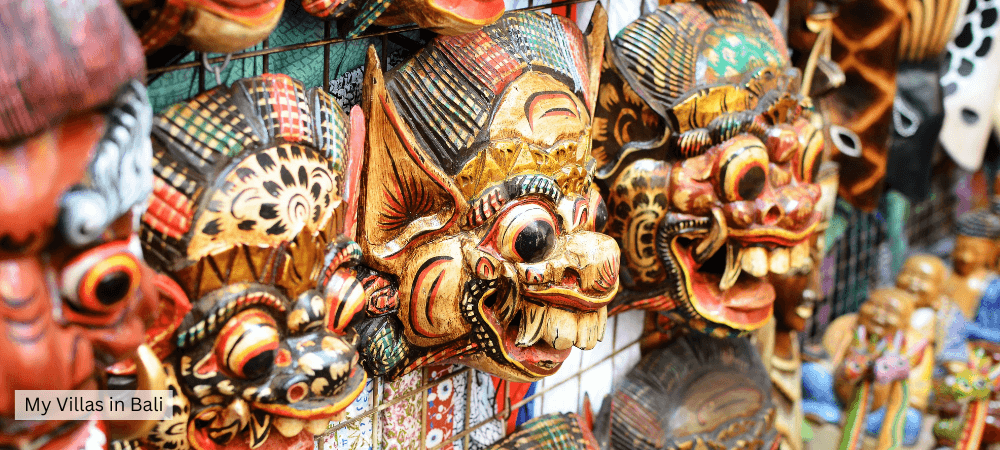
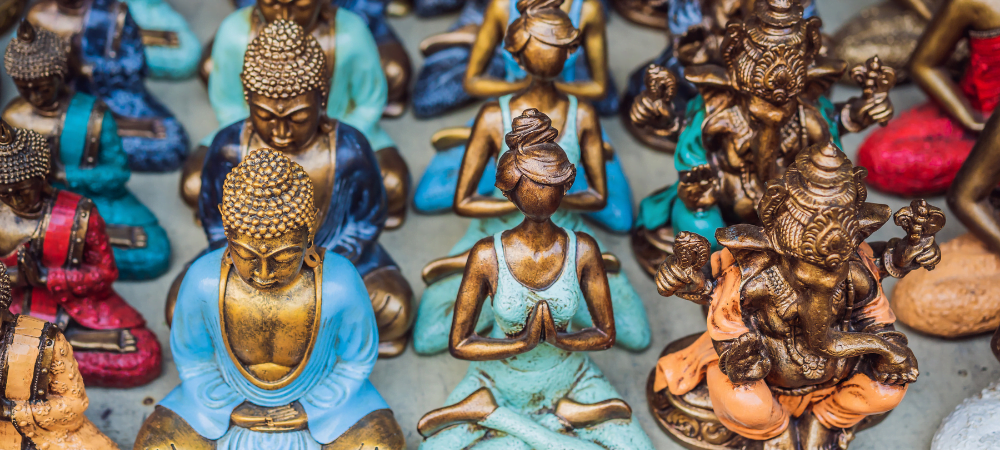
Wood carving is another craft deeply rooted in Balinese culture. You’ll find everything from small decorative ornaments to detailed sculptures depicting Hindu deities, animals and traditional scenes.
Pieces carved from suar wood, hibiscus or teak are especially popular.
Batik and Handwoven Textiles
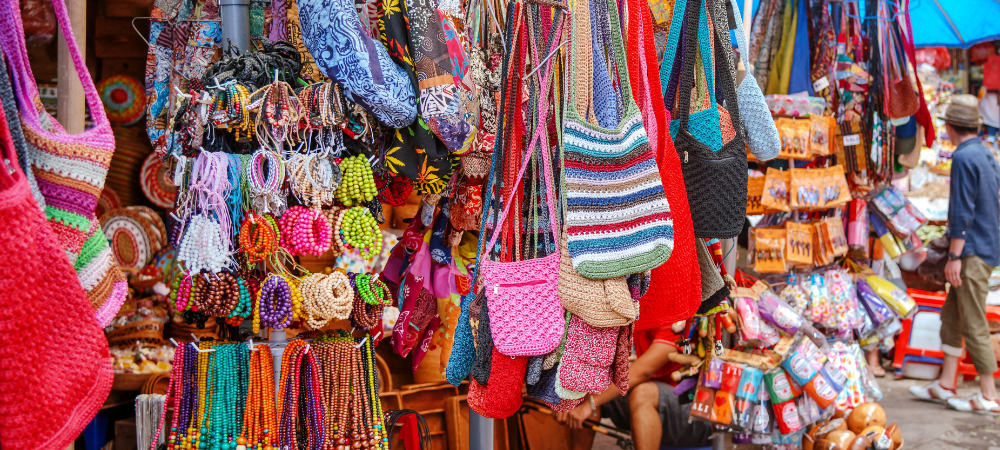
Colourful fabrics make practical souvenirs because they’re lightweight and easy to pack.
Traditional batik and Balinese endek textiles can be used as wall hangings, table runners, scarves or clothing, giving you something you’ll continue using long after your holiday.
Balinese Coffee
Coffee is one of my favourite souvenirs to recommend because it’s easy to take home and easy to share with family and friends.
Kintamani coffee is particularly well known, producing beans with bright citrus notes thanks to the region’s volcanic soil and cooler mountain climate.
Paintings
Ubud has long been recognised as Bali’s artistic centre. Local galleries display everything from traditional Balinese paintings to contemporary works, making it possible to find artwork for almost any budget.
Even a small original painting often makes a far more meaningful souvenir than another generic gift shop purchase.
Handmade Soaps and Natural Skincare
Locally produced soaps made with coconut oil, herbs and botanical ingredients have become increasingly popular in recent years.
They’re affordable, easy to pack, and make thoughtful gifts without taking up much luggage space.
Spices and Local Food Products
Vanilla, cinnamon, cloves, herbal teas and locally produced chocolate are all excellent options if you enjoy bringing home flavours from your travels.
Just remember to check your home country’s customs regulations before packing food products.
Where to Buy Different Souvenirs
One of the nicest things about shopping in Bali is that many traditional crafts are still closely connected to particular villages. If you’re planning a day trip, it’s often worth visiting the area that’s known for producing the item you’re interested in.
| Souvenir | Best Area to Shop |
|---|---|
| Silver jewellery | Celuk |
| Wood carvings | Mas Village |
| Paintings | Ubud and Batuan |
| Batik & textiles | Ubud, Batubulan |
| Coffee | Kintamani |
| Ceramics | Pejaten |
| Handmade soaps | Ubud and Seminyak boutiques |
Shopping this way often gives you the opportunity to learn more about the craft itself, rather than simply buying an item from a shelf.
It’s also a good way to support local artisans whose families have often practised these skills for generations.
How to Tell if a Souvenir Is Handmade
One of the hardest parts of shopping in Bali isn’t deciding what to buy—it’s working out whether you’re looking at something genuinely handmade or something that’s been mass-produced.
There’s nothing wrong with buying an inexpensive souvenir if that’s what you’re after, but if you want something that reflects Bali’s craftsmanship, it’s worth taking a closer look.
Here are a few signs I usually suggest looking for.
| Handmade Item | Mass-Produced Item |
|---|---|
| Small differences between pieces | Every item looks identical |
| Natural variations in wood, fabric or silver | Perfectly uniform finish |
| The seller can explain how or where it was made | Little information about its origin |
| Often found in workshops or galleries | Usually stacked in large quantities |
| Reflects the artist’s individual style | Generic designs seen in many shops |
Don’t be afraid to ask questions. Many artisans are proud of their work and genuinely enjoy explaining how it’s made. Even if you don’t end up buying anything, learning about the craft often becomes part of the experience.
Shopping Tips I’ve Shared With Guests Over the Years
Shopping in Bali is part of the holiday, but a little planning usually leads to better purchases and fewer regrets.
Here are a few suggestions I’ve shared with guests over the years.
- Don’t buy everything on your first day. Spend a little time looking around before making bigger purchases.
- Leave room in your suitcase. Many visitors underestimate how much they’ll want to bring home.
- Visit local workshops if you can. Buying directly from the people who make the products often gives you better quality and a more personal experience.
- Carry some cash. Smaller workshops and market stalls don’t always accept cards.
- Wrap fragile items properly. Ceramics, glass and wood carvings travel much better when they’re packed carefully.
The biggest piece of advice I’d give is simply not to rush. Souvenir shopping is much more enjoyable when it becomes part of exploring Bali rather than something squeezed into the final afternoon before your flight home.
Should You Bargain?
This is another question that comes up quite regularly.
The short answer is sometimes.
In local markets, polite negotiation is generally expected, and it’s perfectly normal to ask whether there’s a better price. It should always be friendly and respectful rather than confrontational.
In galleries, boutiques, supermarkets and many artisan workshops, prices are often fixed. If someone has spent days carving a sculpture or making a piece of jewellery by hand, I personally don’t think it’s worth arguing over a small difference in price.
A fair purchase benefits everyone. You take home something you’ll value, and local craftspeople are properly rewarded for their work.
The Souvenirs Guests Tell Me They Still Treasure
It’s interesting how people’s favourite purchases often aren’t the ones they expected.
Very few guests ever tell me their favourite souvenir was a fridge magnet or a T-shirt.
Instead, it’s usually something that reminds them of a particular day.
A bag of coffee bought while exploring Kintamani.
A silver pendant chosen from a workshop in Celuk.
A painting they carried home because they watched the artist putting the finishing touches on it.
A handwoven textile that now hangs in their living room.
Those items become conversation starters long after the holiday has finished because they carry a memory as well as a place.
What Not to Buy
Most shopping in Bali is straightforward, but there are a few purchases I’d avoid.
- Products made from protected wildlife or endangered species.
- Extremely cheap “designer” copies that are unlikely to last.
- Wooden items that haven’t been properly treated if you’re concerned about your country’s import regulations.
- Very fragile souvenirs if you’re travelling with only hand luggage.
- Mass-produced items that could have been bought almost anywhere in the world.
When in doubt, choose quality over quantity. One well-made keepsake usually has far more meaning than a bag full of items you’ll forget about after a few weeks.
Buy One Story, Not Ten Souvenirs
If I could leave you with one piece of advice, it would be this.
Don’t judge your shopping by how full your suitcase is.
Some of the nicest souvenirs are the ones with a story attached to them.
Maybe it’s the coffee you bought after visiting a plantation in Kintamani.
Maybe it’s a wood carving from a workshop where you watched the craftsman at work.
Maybe it’s a piece of jewellery that reminds you of your honeymoon or anniversary.
Years from now, you’ll probably remember where that item came from far more vividly than how much you paid for it.
For me, that’s what makes a souvenir truly worth bringing home.
FAQ
What are the best souvenirs to buy in Bali?
Some of the most popular Balinese souvenirs include silver jewellery, wood carvings, batik textiles, locally grown coffee, paintings, handmade soaps, ceramics and traditional handicrafts.
Where can I buy authentic Balinese souvenirs?
Some of the best places include Celuk for silver jewellery, Mas Village for wood carvings, Ubud for paintings and textiles, Kintamani for coffee and local artisan workshops across the island.
Is bargaining expected when shopping in Bali?
It depends on where you’re shopping. Bargaining is common in traditional markets, while boutiques, galleries and many artisan workshops usually have fixed prices.
How can I tell if a souvenir is handmade?
Handmade items often have small variations, natural imperfections and a story behind how they were made. Sellers in artisan workshops are usually happy to explain the process and where the materials come from.
What souvenirs are easy to take home from Bali?
Coffee, spices, handmade soaps, jewellery, scarves and smaller textiles are all lightweight options that travel well and make excellent gifts.
What should I avoid buying in Bali?
Avoid products made from protected wildlife, low-quality counterfeit goods and fragile items that may not survive the journey home unless they’re packed carefully.

- Welcome Back To My Villas in Bali - November 17, 2021