
Sacred Monkey Forest in Ubud: Everything You Need to Know Before You Visit
The Sacred Monkey Forest Sanctuary is one of Bali’s most popular attractions, but many first-time visitors arrive expecting it to be nothing more than a place where monkeys roam freely through the trees.
In reality, it’s much more than that.
The Monkey Forest is an active Hindu temple complex, a protected nature reserve and a conservation area that’s home to more than 1,260 Balinese long-tailed macaques. While the monkeys are undoubtedly the stars of the show, they’re only one part of an experience that combines wildlife, ancient temples, towering rainforest and Balinese culture in one beautiful location.
Having recommended day trips to guests staying in Seminyak for many years, I’d still put the Monkey Forest near the top of the list. If you enjoy nature, photography, wildlife or simply experiencing a different side of Bali, it’s well worth the drive to Ubud.
If you’re still deciding whether Ubud deserves a place on your itinerary, my comparison of Seminyak vs Ubud explains how the two destinations offer completely different experiences.
Key Takeaways
- The Sacred Monkey Forest Sanctuary is both a conservation area and an active Hindu temple complex, not simply a tourist attraction.
- More than 1,260 Balinese long-tailed macaques live freely within the sanctuary.
- Most visitors spend between one and two hours exploring the forest and temple grounds.
- Following the sanctuary’s safety guidelines helps ensure an enjoyable visit for both you and the monkeys.
- The Monkey Forest combines perfectly with a day exploring Ubud before returning to Seminyak in the evening.
Is the Monkey Forest Worth Visiting?
If you’re wondering whether the journey from Seminyak is worthwhile, I’d say yes for most travellers. The sanctuary offers a very different experience from Bali’s beaches, beach clubs and coastal towns, making it an excellent change of pace during your holiday.
| If you enjoy… | Is Monkey Forest worth it? |
|---|---|
| Wildlife | ✅ Absolutely |
| Nature walks | ✅ Yes |
| Photography | ✅ Excellent |
| Ancient temples | ✅ Definitely |
| Families with older children | ✅ Usually |
| People who are uncomfortable around monkeys | ⚠️ Consider carefully |
If you’re only in Bali for a few days, I’d recommend combining the Monkey Forest with other attractions around Ubud rather than making the journey just for one stop. My suggested 5-day Bali itinerary shows how you can easily include Ubud without making your schedule feel rushed.
What Makes the Sacred Monkey Forest So Special?
One of the biggest misconceptions is that the Monkey Forest is simply a park filled with monkeys.
In reality, it’s a sacred sanctuary that plays an important role in the local community. The forest follows the Balinese Hindu philosophy of Tri Hita Karana, which emphasises harmony between people, nature and the spiritual world. That philosophy shapes everything from conservation efforts to the preservation of the temples within the sanctuary.
As you walk beneath the giant banyan trees, you’ll discover moss-covered statues, ancient stone pathways, peaceful streams and three centuries-old Hindu temples hidden among the forest. It’s this combination of wildlife, history and spirituality that makes the Monkey Forest feel so different from a traditional zoo or wildlife park.
Understanding a little about Balinese culture before your visit makes the experience even more rewarding. My guide to Bali’s daily customs and traditions explains many of the religious practices and ceremonies you’ll see throughout the island, including those connected to sacred places like the Monkey Forest.
What to Expect During Your Visit
Most people spend between one and two hours exploring the sanctuary, although keen photographers and wildlife lovers often stay longer.
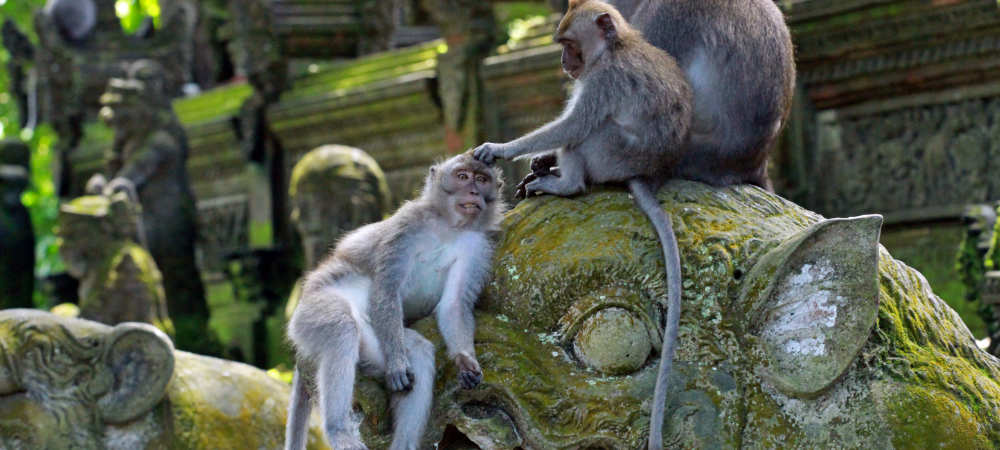
The walking paths are well maintained and wind through dense forest, across small bridges and past ancient temple gates. Along the way you’ll encounter monkeys of all ages, from playful youngsters chasing each other through the trees to older adults relaxing on stone walls or grooming one another.
Although the sanctuary is one of Ubud’s busiest attractions, there are still plenty of peaceful corners where you can stop, watch the monkeys and appreciate the atmosphere.
The Monkeys: What They’re Really Like
One of the biggest misconceptions is that every monkey will immediately jump onto visitors.
In reality, every troop behaves differently. Some monkeys are curious and confident around people, while others completely ignore visitors and go about their day.
You’ll probably see monkeys climbing trees, caring for their babies, grooming one another and occasionally searching for food. Watching these natural behaviours is often more enjoyable than trying to attract their attention.
Remember that these are wild animals, not performers. The sanctuary encourages visitors to observe rather than interact, which creates a better experience for both people and monkeys.
Monkey Safety Tips Every Visitor Should Know
The Monkey Forest is generally very safe, but the monkeys are intelligent, curious and opportunistic.
Following a few simple rules makes the visit much more enjoyable.
| Do | Don’t |
|---|---|
| Walk calmly through the sanctuary. | Run if a monkey approaches you. |
| Keep phones and cameras secure. | Wave food around. |
| Listen to staff instructions. | Touch or tease the monkeys. |
| Allow monkeys to move freely. | Try to pick up baby monkeys. |
| Stay relaxed if one comes close. | Panic or try to push it away. |
Monkeys have learned that bags sometimes contain food, so avoid carrying visible snacks into the sanctuary. Sunglasses, hats and loose items can also attract curious monkeys, so keeping valuables securely packed away is a good idea.
If a monkey does climb onto you, remain calm. Staff are stationed throughout the sanctuary and are experienced in helping visitors if needed.
The Three Sacred Temples Inside the Forest
Many visitors focus entirely on the monkeys without realising they’re walking through an important spiritual site.
The sanctuary is home to three Hindu temples that continue to play an active role in local religious life.
While some areas are reserved for worship, visitors can still admire the beautiful temple architecture, carved stone gateways and peaceful surroundings from the designated public areas.
As with any temple in Bali, remember that these are places of worship rather than tourist attractions. Speaking quietly and behaving respectfully helps preserve the atmosphere for everyone.
Best Time to Visit the Monkey Forest
The sanctuary is open throughout the year, but the experience can vary depending on when you arrive.
Early morning is usually the best time to visit if you prefer cooler temperatures, fewer people and better opportunities for photography.
By late morning and early afternoon, the paths become much busier, particularly during Bali’s peak holiday periods.
If you’re planning your holiday around the quieter months, my guide to the best time to visit Bali explains when you’ll generally find fewer crowds across the island’s most popular attractions.
How Long Should You Spend Here?
For most visitors, one to two hours is the ideal amount of time.
That gives you plenty of opportunity to explore the walking trails, observe the monkeys, visit the temples and take photographs without feeling rushed.
Because Ubud has so much else to offer, I usually recommend turning your visit into a full-day trip rather than driving all the way from Seminyak for the Monkey Forest alone.
You could easily combine the sanctuary with the Ubud Palace, local markets, rice terraces or one of the area’s excellent restaurants before returning to your villa in the evening.
Things Visitors Often Don’t Expect
Even guests who have researched the Monkey Forest are often surprised by a few things.
- The sanctuary feels much larger than it appears in photographs.
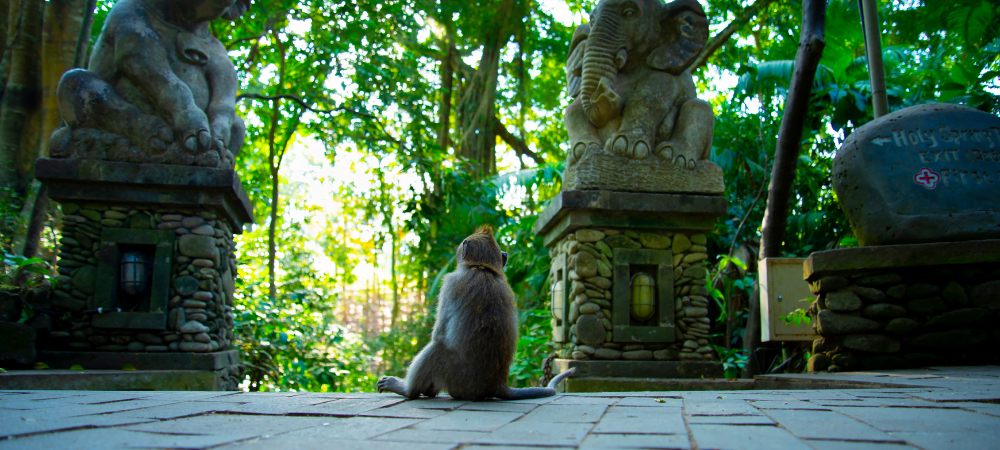
- The ancient banyan trees create a cool, jungle-like atmosphere.
- Some monkeys completely ignore visitors while others are surprisingly curious.
- You’ll hear birds, flowing water and forest sounds as well as the monkeys themselves.
- The temples and stone carvings are just as impressive as the wildlife.
- Many people leave talking as much about the peaceful setting as they do about the monkeys.
These unexpected moments are often what make the Monkey Forest one of the highlights of a Bali holiday.
Is the Monkey Forest Ethical?
This is a question more visitors are asking, and it’s a sensible one.
Unlike animal attractions where wildlife performs for tourists, the monkeys at the Sacred Monkey Forest Sanctuary live freely within the protected forest. The sanctuary combines conservation, education and cultural preservation while asking visitors to observe the animals respectfully rather than encourage unnecessary interaction. Visitors are also expected to follow the official guidelines, which are designed to protect both people and the monkeys.
Planning Your Day Trip from Seminyak
From Seminyak, the drive to the Monkey Forest usually takes around 60 to 90 minutes depending on traffic.
Rather than visiting only the sanctuary, I’d recommend making a full day of it. Spend the morning exploring the Monkey Forest, enjoy lunch in central Ubud, browse the local art markets or visit one of the nearby rice terraces before heading back to Seminyak in the afternoon.
This approach makes the journey feel worthwhile and allows you to experience a completely different side of Bali from the beaches and cafés around Seminyak.
If you’re wondering whether Ubud deserves a place in your itinerary at all, my guide comparing Seminyak vs Ubud can help you decide.
FAQ
Is the Sacred Monkey Forest worth visiting?
Yes. For most visitors, it’s one of Bali’s most enjoyable attractions because it combines wildlife, nature, history and Balinese culture in one location.
Is the Monkey Forest safe for tourists?
Yes, provided you follow the sanctuary’s guidelines. Keep food out of sight, don’t touch the monkeys and remain calm if one approaches you.
How many monkeys live in the Monkey Forest?
The sanctuary is home to more than 1,260 Balinese long-tailed macaques living freely within the protected forest.
How long should I spend at the Monkey Forest?
Most visitors spend between one and two hours exploring the sanctuary before continuing their day in Ubud.
Can young children visit the Monkey Forest?
Yes, but children should always remain close to adults. Because the monkeys are wild animals, parents should ensure children don’t attempt to feed, chase or touch them.
Should I visit the Monkey Forest during my stay in Seminyak?
If you have enough time for a day trip, I’d definitely recommend it. The sanctuary offers a completely different experience from Seminyak and is one of the easiest ways to experience Bali’s wildlife, temples and rainforest in a single visit.

- Welcome Back To My Villas in Bali - November 17, 2021