
Renting a Scooter in Bali: What Tourists Need to Know Before Riding
Guests sometimes ask me whether they should rent a scooter while they’re in Bali. Before we talk about convenience, cost or where you can explore, my first question is much simpler: do you already know how to ride one properly?
If the answer is no, Bali isn’t where I’d choose to learn. The roads can be busy and unfamiliar, traffic doesn’t always behave the way you expect, and conditions can change quickly when it rains. Being able to rent a scooter doesn’t necessarily mean you’re ready to ride one here.
For experienced riders who are properly licensed and insured, a scooter can be a convenient way to make shorter journeys and get around parts of southern Bali. But it isn’t automatically the best transport for every trip. Sometimes walking, using a taxi or ride-hailing service, or hiring a driver makes much more sense.
This guide isn’t intended to persuade you to rent a scooter. It’s here to help you decide whether you should, and what you need to check before getting on one.
Key Takeaways
- If the weather, traffic, scooter or your own confidence doesn’t feel right, don’t ride simply because you’ve already paid for the rental.
- If you’ve never ridden a scooter or motorcycle before, I wouldn’t learn in Bali.
- Make sure you’re legally entitled to ride in Indonesia and that your travel insurance covers you before renting.
- Don’t accept a damaged, badly maintained scooter or a helmet that doesn’t fit properly.
- Bali traffic can be very different from riding at home, even if you’re an experienced rider.
- A scooter can be useful for some shorter journeys, but a driver or other transport is often better for longer sightseeing days.
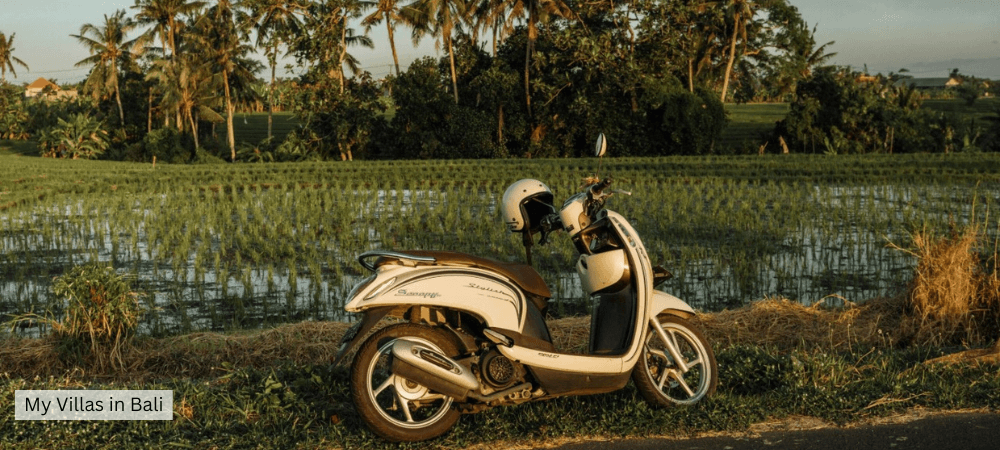
Should You Actually Rent a Scooter in Bali?
Scooters are everywhere in Bali, which can make riding one look easier than it really is. You may also see other tourists renting them with very little apparent preparation. I wouldn’t use either of those things to decide whether you should do the same.
I’d look at your own experience first.
| Your Situation | What I’d Do |
|---|---|
| Experienced motorcycle or scooter rider with the correct licence and insurance | A scooter can be a practical option |
| Experienced rider but unsure about licence or insurance requirements | Check both before renting anything |
| Never ridden a scooter before | Use another form of transport |
| Comfortable riding at home but nervous in dense traffic | Don’t feel pressured to ride in Bali |
| Mostly staying around central Seminyak | You may not need a scooter at all |
| Planning a full day with several sightseeing stops | Compare the scooter with hiring a driver |
| Travelling with young children | I’d generally look at other transport options |
The important distinction is between being able to operate a scooter and being comfortable riding one in unfamiliar traffic.
If you already ride regularly at home, Bali may simply require some adjustment. If your experience consists of trying a scooter once on holiday several years ago, I’d treat that very differently.
There’s also nothing particularly authentic about forcing yourself to ride. You can have an excellent Bali holiday without ever getting on a scooter, and around Seminyak there are plenty of journeys where another option is just as convenient.
Licence and Insurance: Check These Before You Rent
Before worrying about which scooter to choose, make sure you’re legally allowed to ride it.
Don’t assume that having a car licence at home automatically allows you to ride a motorcycle in Indonesia. You need the appropriate licence for the type of vehicle you’re riding and any additional documentation required for your circumstances.
I’d check this before leaving home rather than relying on what a rental operator tells you after you arrive. The fact that somebody is willing to hand you the keys doesn’t necessarily mean you’re legally entitled to ride.
Insurance is just as important. Travel policies have different conditions around motorcycle and scooter use, and some may specify requirements relating to your licence, helmet use, engine size or other circumstances.
Read your own policy rather than assuming scooter riding is covered. If you’re unclear, ask the insurer directly and keep the answer somewhere you can refer to later.
The simple rule I’d use is:
If you’re not sure you’re both licensed and insured to ride, don’t rent the scooter until you are.
For broader practical advice before your trip, our Bali safety guide covers some of the other issues worth knowing before you arrive.
What Riding in Bali Is Really Like
Watching Bali traffic from the side of the road can make it look chaotic, but there is a rhythm to it. The problem for a visitor is that you haven’t had years to become familiar with that rhythm.
Around Seminyak, you can encounter dense scooter traffic, narrow streets, vehicles joining from side roads, pedestrians stepping into the road and cars stopping unexpectedly. Road surfaces aren’t always consistent either, and heavy rain can change conditions very quickly.
Navigation creates another problem. It’s tempting to keep glancing at your phone when you don’t know where you’re going, which is exactly when your attention should be on the road. If you need directions, set things up before moving and stop somewhere safe if you need to check the route.
The other thing I’d keep in mind is that riding experience doesn’t transfer perfectly between countries. Being comfortable on quiet roads at home doesn’t necessarily mean you’ll enjoy riding through Seminyak at a busy time of day.
There’s no reason to prove anything. If the traffic feels uncomfortable once you’re here, use another form of transport.
How to Choose and Check a Rental Scooter
If you’re experienced, properly licensed and insured and decide that renting makes sense, don’t simply accept the first scooter you’re offered.
Use a reputable rental provider and take a few minutes to look over the bike before leaving.
I’d check:
- Brakes
- Tyres and visible tyre condition
- Headlight and brake light
- Indicators
- Mirrors
- Horn
- Fuel level
- Any obvious existing damage
- Whether the scooter feels appropriate for your size and riding experience
Take photographs or a short video of existing scratches and damage before you ride away. That gives both you and the rental operator a record of the scooter’s condition at handover.
Ask what happens if the scooter breaks down, where you’re expected to return it and what the fuel arrangement is. Make sure you also receive whatever vehicle documentation you’re supposed to have while riding.
And check the helmet rather than treating it as an afterthought. It should be in good condition and fit properly. If the one you’re offered is damaged or clearly doesn’t fit, ask for another one before leaving.
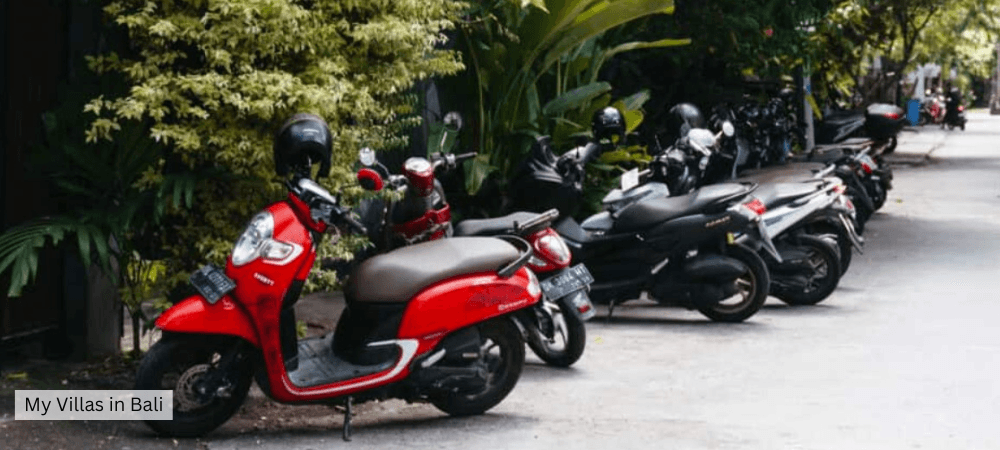
Helmets, Passengers and Everyday Riding
A helmet isn’t optional. Both the rider and passenger should wear an appropriate helmet, and I’d make sure it fits properly rather than accepting whatever happens to come with the rental.
Carrying a passenger also changes how the scooter handles and brakes. If you’re only just comfortable riding by yourself, adding another person isn’t a good idea.
A few other rules are simple: don’t use your phone while moving, don’t ride after drinking alcohol, and don’t copy unsafe behaviour simply because you see other riders doing it. Local traffic habits aren’t a substitute for riding legally and sensibly.
When a Scooter Makes Sense From Seminyak
For an experienced rider, a scooter can be useful for shorter journeys where parking a car is inconvenient and you want the flexibility to come and go without arranging transport each time.
But don’t assume you need one simply because you’re staying in Bali.
If you’re based centrally in Seminyak, you can walk to plenty of restaurants, cafés, shops and the beach. For other short journeys, taxis and ride-hailing services may be easier than dealing with a rental scooter, parking and helmets.
This is especially true if you only expect to use the scooter once or twice. Renting one for an entire week doesn’t automatically make sense just because it’s relatively inexpensive.
If you’re deciding how much you can realistically do without transport, my guide to a perfect day in Seminyak gives you an idea of how much is available locally.
When I’d Choose a Driver or Other Transport Instead
There are plenty of days when I’d choose a car and driver over a scooter.
A long sightseeing day is the obvious example. If you’re visiting several places around Ubud, heading into the mountains or travelling a substantial distance across Bali, having a driver means you can concentrate on the day rather than navigation, weather and finding somewhere to park.
I’d also choose another option when:
- Heavy rain is expected
- You’re travelling with children
- You’re carrying significant luggage
- You plan to drink alcohol
- You aren’t confident about the route
- You’re tired after a long day
- Several people are travelling together
For shorter journeys around southern Bali, taxis and app-based transport can be perfectly practical.
The question isn’t whether a scooter is cheaper or more adventurous. It’s which transport makes the most sense for the journey you’re actually taking.
If Something Doesn’t Feel Right, Don’t Ride
This sounds obvious, but it’s worth saying.
Perhaps heavy rain starts just before you’re due to leave. Maybe the helmet you’ve been given doesn’t fit. The scooter feels different from what you’re used to, you’re more tired than expected or the traffic outside suddenly looks much busier than you’re comfortable with.
Change the plan.
Don’t ride simply because you’ve already paid for the rental or because everybody else in your group is doing it. Losing the cost of a day’s scooter rental is a very small problem compared with riding when you don’t feel comfortable.
The same applies during the trip. If conditions deteriorate, find somewhere safe to stop rather than convincing yourself you need to keep going.
FAQ
Do you need a licence to ride a scooter in Bali?
Yes. You need to be legally entitled to ride the type of motorcycle or scooter you’re using in Indonesia. Don’t assume your ordinary car licence at home automatically covers motorcycle riding.
Do I need an International Driving Permit to ride in Bali?
Foreign visitors may need an International Driving Permit alongside an appropriate home-country motorcycle licence, depending on their circumstances. Check the current Indonesian requirements before travelling and make sure the permit covers motorcycles rather than cars only.
Does travel insurance cover scooter riding in Bali?
It depends on your policy. Insurers can impose conditions relating to licensing, helmets, engine capacity and other factors. Check your own policy before riding rather than assuming you’re covered.
Is it safe for tourists to ride scooters in Bali?
There isn’t a single answer that applies to every traveller. An experienced, properly licensed rider may be comfortable riding in Bali, while somebody who has never ridden before faces a very different level of risk. I wouldn’t recommend learning to ride here.
Do you have to wear a helmet in Bali?
Yes. Motorcycle riders and passengers are required to wear an appropriate helmet. I’d also make sure the helmet you’re given fits correctly and is in good condition.
Is a scooter the best way to get around Seminyak?
Not necessarily. If you’re staying centrally, many restaurants, shops and the beach may be accessible without one. Taxis and ride-hailing services work well for many shorter journeys, while a driver can make more sense for longer sightseeing days.
A scooter can be convenient in Bali, but convenience isn’t enough reason to rent one. If you’re experienced, correctly licensed, properly insured and comfortable with the conditions, it can be a useful transport option. If any of those pieces are missing, I’d choose another way to get around.

- Welcome Back To My Villas in Bali - November 17, 2021